
Termawise

Home / Results

Results and case studies

Measurements published by SPACECOOL and its international network. They are projects by the manufacturer and its partners, not projects carried out by Termawise. We state what was measured, where, under what conditions and with what limitations.

Energy consumption results

Measured consumption reductions only. Each row is a different system, period and climate: they are not comparable with each other or directly transferable.

−7.8 %electricity use

Concrete rooftop in Tokyo

Average reduction in summer electricity use (max. 8.7 %) after installing a waterproofing sheet with SPACECOOL® on about 600 m² of roof.

Period
1 May – 30 Sep 2024
Site
Tokyo Metropolitan Bureau of Transportation, Shinagawa depot
Product
Innovation Proof RR

Source: spacecool.jp · spacecool.eu

−29 %air-conditioning energy

Container houses · Saudi Arabia

Average reduction in occupied Red Sea Global containers (max. 37 %), comparing units with and without SPACECOOL®.

Period
16–24 July (9 days)
Units
2 × 12 × 3.6 × 3.7 m
Climate
Desert, summer

Source: spacecool.jp · spacecool.eu

−21 %air-conditioning energy · approx.

High-voltage switchgear enclosure · ENEOS

Reduction in air-conditioner energy on sunny days (≈ 20 % over the whole period, including cloudy and rainy days). Material on roof and four walls.

Before
22 Jul – 31 Aug
After
from 1 Sep
Partner
ENEOS Holdings, Inc.

Source: spacecool.jp

−46 %electricity use

Containers · Honda Yorii plant

Lower consumption than a standard container (33 % less than one with heat-shielding paint), in a joint development trial with Honda under real plant conditions.

Comparison
3 containers: SPACECOOL®, heat-shielding paint, standard
Date
Not published

Source: spacecool.jp

−8 / −18 %outdoor-unit energy

Outdoor units · Kanagawa (Japan)

Two sites in the same prefecture: 8 % on an air-conditioning unit with magnet sheet (thermostat at 28 °C) and up to 18 % on a food-plant refrigeration unit with film.

Period
Jul–Sep 2024 (8 % case)
Casing
−5.5 °C and −7.2 °C

Source: spacecool.jp

NoticeResults from documented trials are not a guarantee of equivalent results at any installation. Savings depend on the specific conditions of each project.

Documented cases

Context, problem, solution, method, result, source and limitations. Where data has not been published, we say so.

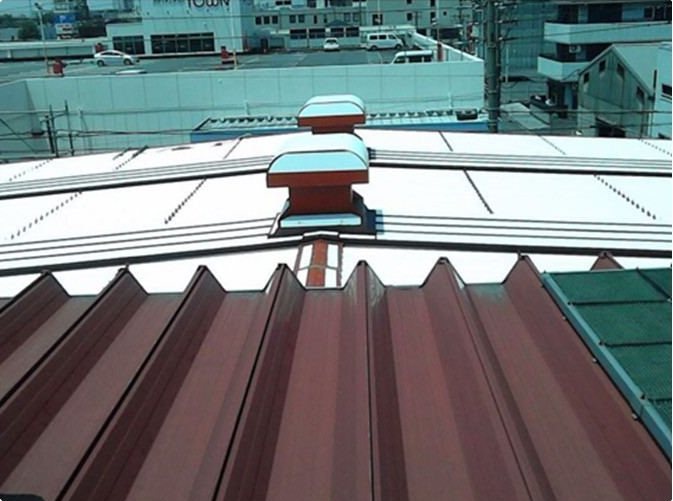
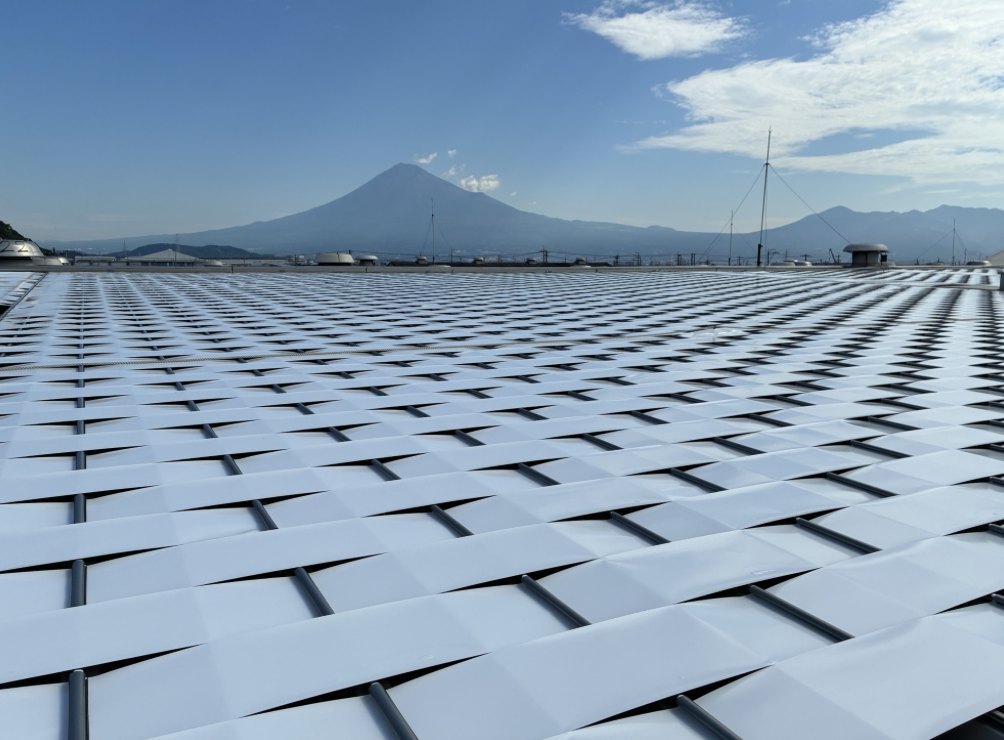
Nikkei Metal Act roof with SPACECOOL® Roof Shade
Photo: SPACECOOL

Industrial roof · Shizuoka, Japan

Nikkei Metal Act Co., Ltd.

4,000 m²of roof treated
≈ −10 °Cunder roof, treated vs untreated areas
Context
Nippon Light Metal group factory (Kanbara plant) with a folded-plate metal roof.
Thermal problem
Heat under the roof and heatstroke risk for staff in summer.
Solution
Covering the roof without stopping production. The company compared SPACECOOL® with reflective paints and other options.
Product
SPACECOOL® Roof Shade (patented system for folded-plate roofs, made by a SPACECOOL partner).
Installation
Approx. 4,000 m². Announced in August 2026.
Method
Under-roof temperature comparison between treated and untreated areas during installation.
Results
About 10 °C lower under the roof in treated areas. Lower heatstroke risk and lower AC energy are expected (no figure published).
Source
spacecool.jp · LOGI-TODAY (24/08/2026)
Limitations
Spot measurement during installation; no consumption data published.
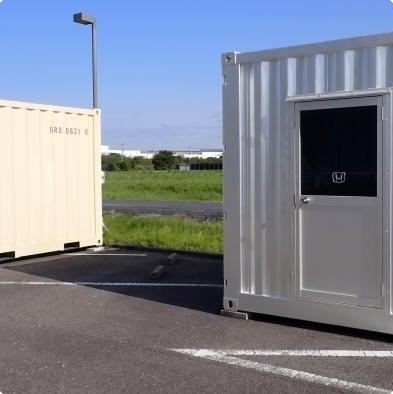
Test containers at the Honda Yorii plant
Photo: SPACECOOL

Containers and walkway · Yorii plant, Japan

Honda Motor Co., Ltd.

−46 %electricity vs standard container
−33 %vs container with heat-shielding paint
≈ −15 °Cwalkway interior ceiling
Context
Joint development between SPACECOOL and Honda at an operating automotive plant.
Thermal problem
Heat load in air-conditioned containers and walkways between buildings.
Solution
Three containers compared: with SPACECOOL®, with heat-shielding paint and standard. Additional application on a walkway.
Product
SPACECOOL
Method
Electricity consumption of each container under real conditions; walkway ceiling temperature with AC off at the daily peak.
Results
46 % less consumption than the standard container and 33 % less than the paint one. Walkway ceiling about 15 °C cooler. A simulation estimates up to 2 % less CO₂ for large plants.
Source
spacecool.jp · spacecool.jp/buildings
Limitations
Trial date and duration not published. The 2 % CO₂ is a simulation, not a measurement.
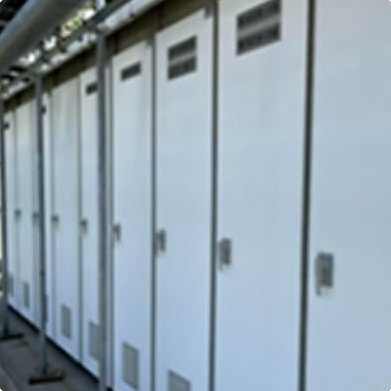
Electrical equipment enclosures covered with SPACECOOL®
Illustrative image of equipment enclosures with SPACECOOL® (SPACECOOL). Not necessarily the ENEOS installation.

Electrical equipment · Japan

ENEOS: high-voltage switchgear enclosure

≈ −21 %AC energy on sunny days
≈ −20 %over the whole period
Context
Joint initiative with ENEOS Holdings on an enclosure housing high-voltage breakers, transformers, batteries and three air-conditioners.
Thermal problem
Solar radiation on the envelope forces continuous cooling to protect the equipment.
Solution
Covering the roof and four walls (five faces).
Product
Not published by the source.
Method
AC energy before (22 Jul – 31 Aug) and after (from 1 Sep) installation.
Results
About 21 % less on sunny days and about 20 % less over the whole period, including cloudy and rainy days.
Source
spacecool.jp
Limitations
Compares different periods (summer vs September); weather differences may influence the result.
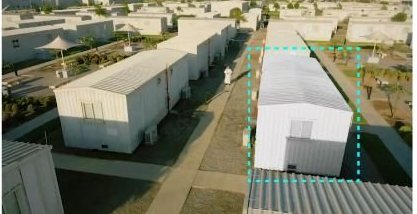
Container houses with and without SPACECOOL® in Saudi Arabia
Photo: SPACECOOL

Container houses · Saudi Arabia

Red Sea Global

−29 %average AC energy (occupied)
−37 %maximum
Context
Container houses owned by Red Sea Global, with Zamil Group.
Thermal problem
Desert climate: the roof and walls build up heat and the air-conditioning runs almost non-stop.
Solution
Comparison of two identical containers (12 × 3.6 × 3.7 m), with and without SPACECOOL®.
Product
Not published by the source.
Method
Air-conditioning energy of both units from 16 to 24 July, occupied.
Results
29 % average reduction (max. 37 %). With the units unoccupied, the source states 49 % on average, labelled as an estimate.
Source
spacecool.jp · spacecool.eu
Limitations
9-day period in an extreme desert climate. Published CO₂ figures have an inconsistent time basis, so we do not reproduce them.
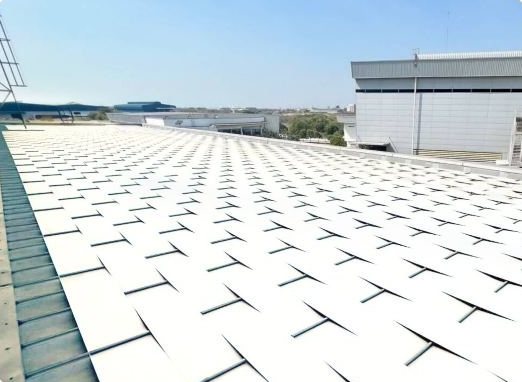
Roof treated with SPACECOOL®
Illustrative image of a roof with SPACECOOL® (SPACECOOL). Not the Tokyo installation.

Concrete rooftop · Tokyo, Japan

Shinagawa depot, Tokyo Metropolitan Bureau of Transportation

−7.8 %average electricity use
−8.7 %maximum
Context
Building with about 600 m² of flat concrete roof. SPACECOOL Europe presents it as an office building.
Thermal problem
Heat gain through the roof during summer.
Solution
Replacement/covering with a waterproofing sheet integrating SPACECOOL®.
Product
Innovation Proof RR
Installation
About 600 m².
Method
Building electricity use between 1 May and 30 September 2024.
Results
Average reduction of 7.8 % and maximum of 8.7 %.
Source
spacecool.jp · spacecool.eu
Limitations
The source does not publish the method or comparison baseline. It illustrates that, in buildings, savings on total consumption are usually single-digit.
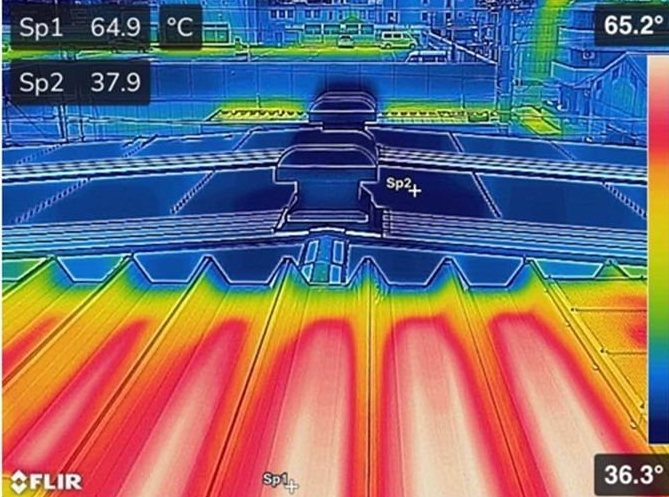
Industrial metal roofThermal image of metal roof with and without SPACECOOL®

Illustrative images of a metal roof with SPACECOOL® and its thermal image (SPACECOOL); not this plant.

Factory roof · Japan

Kyusei Beverage Industry Co., Ltd.

−25.6 °Croof surface temperature
−7.6 °Cunderside of the ceiling
Context
Soft-drink OEM manufacturer with production areas under a metal roof.
Thermal problem
Heat in the production area; roof sprinkling and extra cooling did not help enough.
Solution
Roof partly covered with SPACECOOL® shading.
Product
SPACECOOL® Roof Shade
Method
Temperatures before and after, late May 2026.
Results
Roof from 63.5 °C to 37.9 °C; ceiling underside from 41.2 °C to 33.6 °C.
Source
PR TIMES (18/06/2026)
Limitations
Spring measurement; the company will evaluate summer performance. Temperatures, not consumption.

Other documented results

Note the “type” column: surface temperature, indoor temperature and consumption are not equivalent.

ResultTypeApplicationSource
−8 %Electricity useAC outdoor unit, automotive parts maker (Kanagawa), Magnet Sheet, Jul–Sep 2024spacecool.jp
up to −18 %Electricity useRefrigeration outdoor unit, food plant (Kanagawa), Filmspacecool.jp
−20.2 %AC energyAutomotive parts factory roof (Miyoshi, Aichi), Film HDspacecool.jp
−3.7 °CAverage indoor temperatureQTnet telecom station (Fukuoka), Sep 2023 – Sep 2024spacecool.jp
−27 °CSurface temperatureMetal processing plant roof (Japan): 64.9 → 37.9 °CSPACECOOL presentation
−25 daysProductivityPig farm (Shizuoka): days to shipment weight; roof 67.1 → 33.4 °Cspacecool.jp
−23.3 °CSurface temperatureRefrigerated trailer roof vs twin trailer (Nicosia, Cyprus)Climacore (distributor)
−9.4 °CRadiant temperatureSPACECOOL® tent vs conventional tent (Tokyo 2025)spacecool.jp

SPACECOOL recognition

Forbes JAPAN

CEO Masahiro Suemitsu, “Japan Entrepreneur BEST 10”

Good Design Gold Award

Japan Institute of Design Promotion · 2024

METI Highest Award

25th Japan Venture Awards · Dec 2025

Net Zero Future 50

PwC Middle East selection · Nov 2023

COP28 · COP30

Japan Pavilion, Dubai 2023 and Brazil 2025

SET Award 2026

Top 100 start-ups (German Energy Agency, dena)

Awards given to SPACECOOL Inc. (Japan). Member of the UNEP Cool Coalition passive cooling working group.

Next step

Heat, energy use or carbon footprint? Let’s talk.

In a first call we understand what your company needs and tell you how SPACECOOL® can help. We study the solution and present you with a proposal.

Prefer to write? info@termawise.com